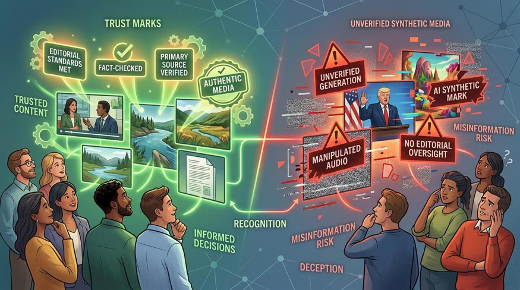
As generative AI capabilities advance, the boundary between human-created and machine-generated content has become increasingly difficult to perceive. Synthetic articles, manipulated imagery, and AI-generated video now circulate alongside authentic journalism and creative work, creating an environment where audiences struggle to distinguish genuine media from algorithmic fabrication. This erosion of trust represents one of the most consequential challenges facing the media ecosystem.
The problem extends beyond obvious deepfakes and spam content. Sophisticated AI systems can produce text that mimics journalistic tone, generate photorealistic images of events that never occurred, and create audio recordings that convincingly replicate real voices. For average consumers without technical expertise or specialized detection tools, distinguishing authentic from synthetic content has become nearly impossible at first glance. This confusion undermines confidence in legitimate publishers while giving bad actors cover to spread misinformation.
Media organizations bear a responsibility to proactively signal authenticity to their audiences. Content provenance initiatives that cryptographically verify the origin and editing history of published work provide technical foundations for trust. Clear labeling of AI-assisted content, transparent disclosure of production methods, and consistent visual identity systems all help audiences recognize genuine publications. The goal is not to demonize AI tools, which offer genuine productivity benefits, but to ensure transparency about where human editorial judgment ends and algorithmic generation begins.
Education plays a critical role in building audience resilience against synthetic deception. Publishers who invest in media literacy content help their readers develop critical evaluation skills, examining source credibility, cross-referencing claims, and recognizing typical patterns of AI-generated misinformation. These educational efforts strengthen audience trust while positioning the publisher as a transparent, audience-first organization.
The relationship between transparency and audience trust directly impacts business performance. Research consistently demonstrates that consumers reward authentic brands with loyalty and engagement. Resources examining how transparency drives conversion outcomes, such as https://gymmarbella.net/marketing-transparency-trust-conversions/, illustrate the commercial imperative behind authenticity signaling. Publishers who build verifiable trust mechanisms into their content workflows gain competitive advantages that synthetic content farms cannot replicate.
Looking forward, authentication infrastructure will become as essential to digital publishing as SSL certificates became for e-commerce. Protocols that verify content origin, editorial chain of custody, and human oversight will be expected by audiences and platforms alike. Publishers that invest early in these trust-building mechanisms will define the standards that separate authoritative media from the rising tide of algorithmic noise.
Key Takeaways: - AI-generated content has made authentic media increasingly difficult for audiences to identify - Content provenance standards and transparent labeling help signal authenticity - Media literacy education builds audience resilience against synthetic deception - Transparency directly impacts trust, loyalty, and conversion outcomes - Authentication infrastructure will become essential for credible digital publishing
Resources: